
IELTS Reading Practice Test – Passage 1
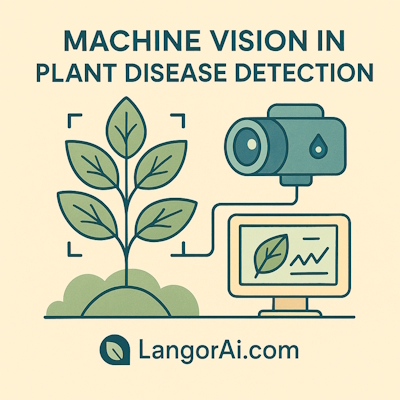
Machine Vision in Plant Disease Detection
Plant diseases pose a persistent threat to agricultural productivity worldwide. Traditionally, farmers have relied on visual inspection to identify signs of infection, such as discoloration, leaf spots, and abnormal growth. However, accurate diagnosis requires expertise, and even skilled professionals may struggle to detect early-stage symptoms that are subtle or inconsistent. In recent years, machine vision—an interdisciplinary field that combines image processing, artificial intelligence, and agricultural science—has emerged as a promising approach to addressing this challenge.
Machine vision systems typically begin with the collection of high-quality images using cameras mounted on drones, mobile devices, or automated field robots. The raw images are preprocessed to reduce noise, adjust contrast, and segment plant regions from the background. This ensures that irrelevant features, such as soil or sky, do not interfere with the analysis. Advanced algorithms, particularly deep convolutional neural networks (CNNs), are then trained to recognize patterns associated with specific diseases. These networks learn to differentiate subtle texture changes, color distortions, and leaf-shape irregularities that would be imperceptible to the human eye.
One of the major advantages of machine vision is its scalability. Once a model has been trained, it can analyze thousands of plants in a single field within minutes, making it feasible to detect outbreaks early and apply targeted treatment. This reduces the excessive use of pesticides, which often occurs when farmers cannot precisely identify infected areas. In addition, early detection allows for timely intervention, preventing diseases from spreading across entire crops and contributing to improved food security.
Despite these advantages, several challenges remain. Variations in lighting conditions, camera quality, and plant genetics can introduce inconsistencies in the data, potentially reducing the accuracy of predictions. For example, sunlight may cast shadows on leaves, creating patterns that resemble disease symptoms. Similarly, plants of the same species grown in different climates may display natural color variations that machine learning models could misinterpret. To address these issues, researchers are developing adaptive algorithms capable of adjusting to environmental conditions in real time.
Another limitation is the need for large, well-labeled datasets. Training a CNN requires thousands of images representing both healthy and diseased plants. However, acquiring and labeling such data is time-consuming, particularly when rare diseases are involved. Crowdsourced platforms, where farmers upload images from their fields, have begun to mitigate this issue, but concerns remain regarding image quality and consistency. Moreover, some diseases manifest beneath the plant surface and cannot be detected using visible-light imaging alone. In these cases, multispectral or thermal imaging may be required.
Looking forward, machine vision is likely to become increasingly integrated into smart farming systems. Autonomous robots equipped with real-time disease detection systems could navigate fields independently, providing continuous monitoring and immediate feedback. Combined with predictive analytics and climate data, these systems may eventually forecast disease outbreaks before they occur. While machine vision is not a complete replacement for agronomists, it offers a powerful tool to enhance human judgment and improve agricultural resilience.
Questions 1–5 (Multiple Choice)
A) Genetic sequencing
B) Human visual inspection
C) Satellite thermal scanning
D) Soil chemical testing
A) Collecting images from drones
B) Learning visual patterns of disease
C) Repairing damaged leaf tissue
D) Adjusting environmental conditions
A) It eliminates the need for all pesticides.
B) It allows targeted treatment and reduced chemical use.
C) It guarantees full crop recovery.
D) It eliminates genetic crop variation.
A) Soil temperature
B) Shadow patterns from sunlight
C) Wind direction
D) Rainfall duration
A) Too many labeled images are available
B) Difficulty obtaining high-quality labeled datasets
C) CNNs do not work on agricultural data
D) Farmers refuse to upload images
Questions 6–10 (Yes / No / Not Given)
Write: YES if the statement agrees with the passage
NO if it contradicts the passage
NOT GIVEN if it is not mentioned
Questions 11–13 (One-word answers)
Write ONE WORD only.
Questions 14–15 (Sentence Completion)
Complete the sentences below.
Answer Key + Explanation & Strategy
1 → B – Human visual inspection is explicitly mentioned.
2 → B – CNNs learn subtle disease features.
3 → B – Targeted treatment reduces pesticide use.
4 → B – Shadows distort leaf appearance.
5 → B – Lack of labeled datasets is stated clearly.
6 → NO – Text: Not a replacement, but a tool to enhance judgment.
7 → YES – Lighting variation is specifically discussed.
8 → YES – Multispectral imaging needed in some cases.
9 → NO – The passage says quality is inconsistent.
10 → YES – Future forecasting systems are mentioned.
11 → multispectral
12 → CNN
13 → drone
14 → pesticides
15 → robots
کلید پاسخها و تحلیل دوزبانه – Machine Vision in Plant Disease Detection
واژگان کلیدی / Key Vocabulary
The model detects subtle changes in texture.
labeled dataset / training dataset