
IELTS Reading Practice Test – Passage 1
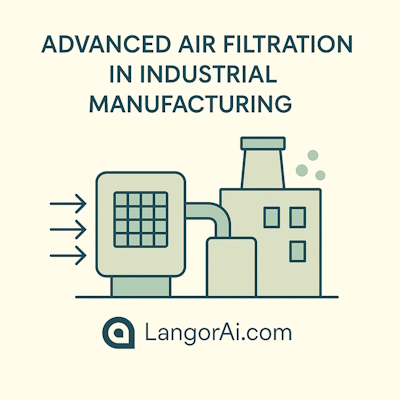
Advanced Air Filtration in Industrial Manufacturing
Industrial factories have long been associated with air pollution, particularly the release of microscopic particles and harmful gases into the atmosphere. For decades, manufacturing facilities emitted soot, sulfur compounds, and volatile organic chemicals without significant filtration. However, growing concerns about respiratory health, urban air quality, and global warming have led to a strong push for more sophisticated air purification systems in industrial processes.
Modern air filtration in factories now involves several layers of technology. One common solution is the High-Efficiency Particulate Air (HEPA) filter, capable of trapping particles as small as 0.3 microns. HEPA filters are widely used in industries such as pharmaceuticals and food processing, where air purity directly affects product safety. However, HEPA filters require regular replacement and generate waste materials that must be carefully disposed of.
Another advanced system is Electrostatic Precipitation (ESP). Unlike traditional filters that physically trap particles, ESP systems use electrical charges to attract and remove contaminants from the air. This method is particularly efficient for removing fine dust from steel plants and cement factories. Still, the efficiency of ESP depends heavily on stable humidity levels and consistent airflow, which can be difficult to maintain in large production environments.
Chemical scrubbers represent a third major approach to industrial air cleaning. Instead of filtering particles, scrubbers remove harmful gases such as sulfur dioxide and nitrogen oxides by forcing exhaust air through liquid solutions that chemically neutralize pollutants. While scrubbers are effective in reducing acid rain–causing emissions, they are costly to operate and produce wastewater that requires specialized treatment.
Environmental agencies across the world have implemented stricter air quality regulations, pushing factories to invest in cleaner technologies. Countries in the European Union and East Asia enforce strict limits on particulate emissions, prompting companies to modernize their filtration systems. However, in developing nations where regulations are less stringent, many factories still use outdated equipment, contributing significantly to air pollution in urban regions.
Despite the challenges, the shift toward advanced air filtration systems has led to measurable improvements. Studies in industrial regions of South Korea and Germany have shown noticeable reductions in respiratory illnesses after factories upgraded their purification systems. At the same time, the cost of adopting high-performance filters has gradually decreased due to technological innovation and mass production.
As environmental awareness grows and governments continue pushing for cleaner air, factories worldwide are likely to transition toward even more efficient filtration systems in the coming decades. Some researchers are already developing biodegradable filters and renewable-powered purification units, reducing both energy use and long-term waste.
Questions 1–7 (True / False / Not Given)
Questions 8–12 (Match the Information to the Paragraph A–G)
A = Paragraph 1
B = Paragraph 2
C = Paragraph 3
D = Paragraph 4
E = Paragraph 5
F = Paragraph 6
G = Paragraph 7
Questions 13–15 (ONE WORD ONLY)
Answer Key & Explanations
1 → FALSE – The first paragraph explains that factories historically lacked filtration.
2 → TRUE – Paragraph 2 states HEPA filters trap particles down to 0.3 microns.
3 → TRUE – Paragraph 3 describes ESP using electrical charges.
4 → FALSE – Paragraph 3 clearly states ESP efficiency depends on humidity and airflow.
5 → TRUE – Paragraph 4 explains scrubbers neutralize harmful gases.
6 → FALSE – Paragraph 5 notes developing countries have weaker regulations.
7 → TRUE – Paragraph 6 gives evidence of improved health outcomes.
8 → D – Chemical scrubbers described in Paragraph 4.
9 → E – Regulations appearing in Paragraph 5.
10 → C – ESP technology in Paragraph 3.
11 → A – Lack of filtration historically in Paragraph 1.
12 → F – Health benefits discussed in Paragraph 6.
13 → particles
14 → HEPA
15 → scrubber